Every part of the practice,
on one project.
From the first client conversation to the final install, Designer Edge covers the whole arc of an engagement. Here is all of it, laid out the way a project runs.
30 days free · No card required
Win the client
Before anything is designed.
A branded inquiry page and an intake that reads the client’s taste and writes it down as a brief. A proposal they accept with a click. An agreement they sign on any screen. The deposit tracked.
- Lead page & intake
- Client brief
- Proposal
- Agreement & e-signature

Design the rooms
Each step knows what the last one decided.
Concept directions built from the brief. A floor plan in true dimensions that inherits the palette. Products scored against both. A schedule the client approves in a tap. The palette, the footprints, the budget: none of it retyped.
- Concept & mood boards
- Color & material
- Floor & ceiling plans
- Sourcing with fit scores
- Design board
- Selections
Buy & deliver
From approved to installed.
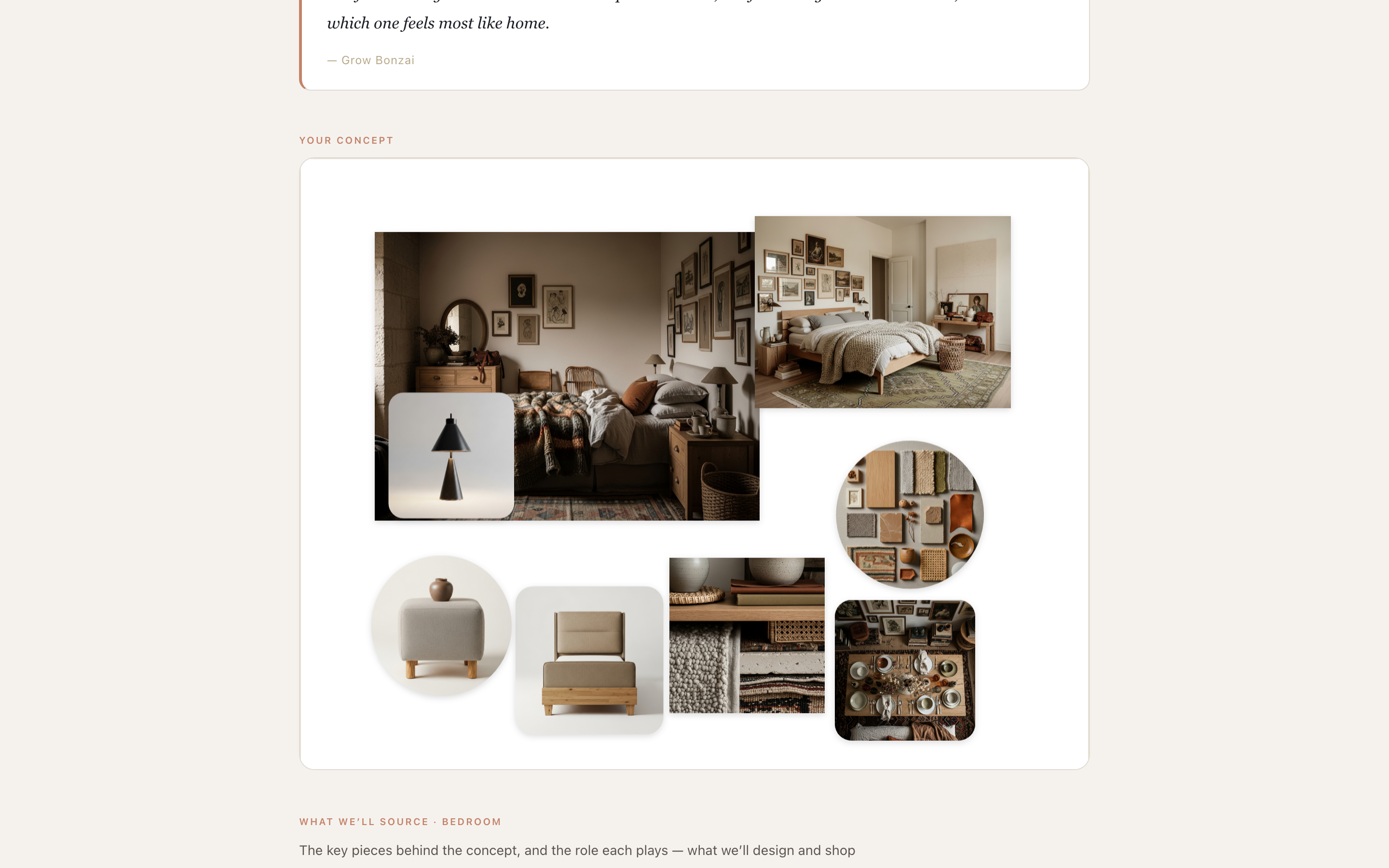
The approved pieces rendered into the client’s actual room. Forward the order confirmation and it tracks itself through delivery. A reveal that works on a phone, and a branded binder to hand over at the end.
- In-room render
- Procurement tracking
- Reveal
- Handoff & binder
Run the business
The part nobody pays you for, handled.
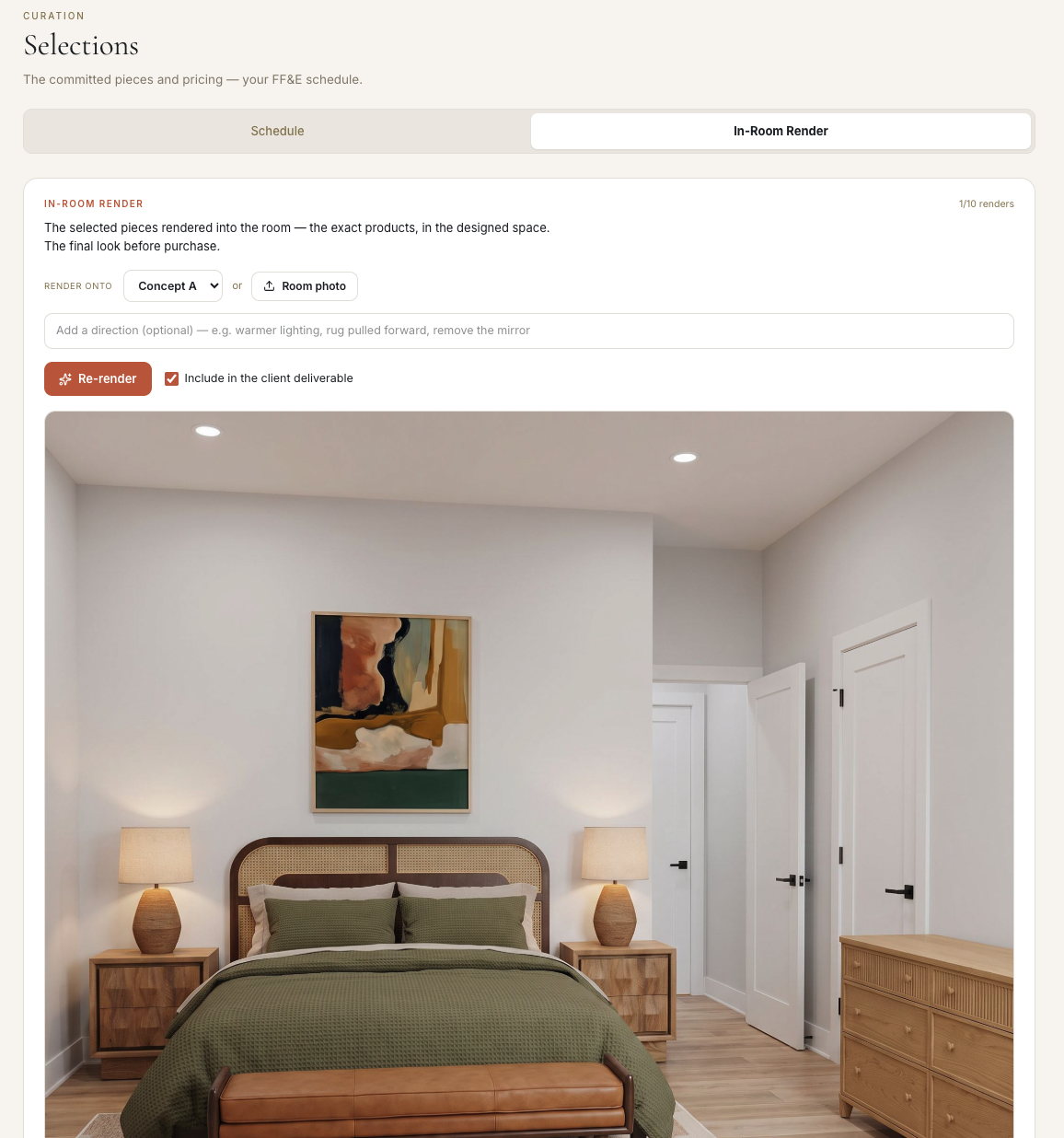
Meetings with notes that take themselves. Invoices that look like yours and post to QuickBooks in a click. Files, notes and photos filed against the right room. A project home that shows where every room stands.
- Meetings & notes
- Invoicing with QuickBooks
- Files & notes
- Project home

The client’s side
One link. No password. Your name at the top.
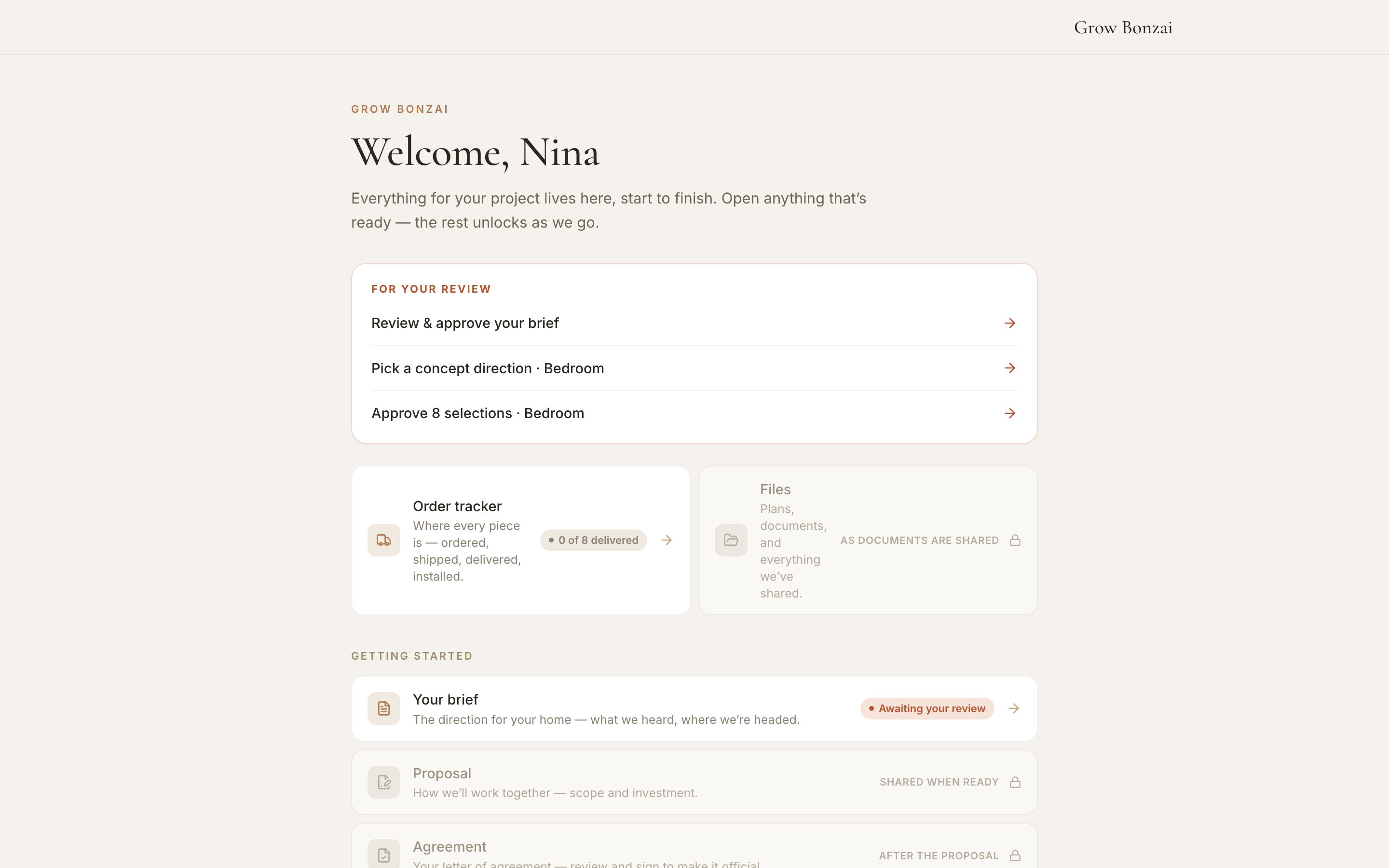
Brief, concepts, plans, boards, selections, tracker, reveal. Twenty pages behind a single link, all under your studio’s name, and never ours.
- The client hub
The genuine difference
Five things a comparison chart won’t show you.
Each step feeds the next.
Most tools are places to put work. This is a line where the intake shapes the brief, the brief scores the sourcing, the concept sets the plan’s palette, and the selections become the render, the orders and the invoice.
The client experience is the product.
Elsewhere the client gets PDFs. Here they get a branded hub, sign a real agreement, pick a concept, watch orders arrive, and receive a binder, all under your name.
AI that earns its place.
Used where it compounds: fit scoring, meeting notes, concept drafts, the render. Kept out where it would erode trust: paint is real Sherwin-Williams, plans are true dimensions. Anything it writes, you can overrule.
It helps you design, not just file.
A palette pulled from a photograph. Paint tried on the real wall. A cutout on a live board. The room rendered from the plan.
It looks like it was made by people who care about interiors.
That is rarer than it should be, and it is the first thing a designer judges.